Sleepovers with Friends: How to Make the First Sleepover at Your Home a Success
Discuss the sleepover with the parents first
Before planning food, games and other activities for the evening, a well-prepared sleepover with friends begins with a brief conversation between the parents.
Agree on when your overnight guest will be dropped off and collected the following morning, and exchange phone numbers. Also ask about allergies, intolerances, any necessary medication, and the child’s important habits or fears.
Especially for the first night away from home, you should discuss a situation that children, in all their excitement, rarely consider: What happens if the child becomes homesick late in the evening or in the middle of the night and wants to go home?
Agree beforehand whether you may call the parents during the night and whether the child can be collected if necessary. If the family lives farther away, clarify how you would handle this situation.
Simply knowing that they can return home at any time can help a child feel secure and take the pressure out of an unfamiliar situation.
A first sleepover at a friend’s house is an adventure — but it does not have to be a test of courage.
What shall we plan for the evening together?
Once the essentials have been agreed with the parents, the most enjoyable part of the preparation begins: What can we do to make the sleepover a special experience for the children?
There is no need to plan every hour. For a five- or six-year-old, it is often exciting enough that their friend is staying for dinner, that they will put on their pyjamas together later, and that this time nobody has to go home.
Before planning dinner and snacks, make sure you ask the parents whether their child has allergies or food intolerances. Can they eat dairy products, eggs or nuts, for example? Are there other foods they cannot tolerate or simply dislike? This allows you to prepare suitable food for your overnight guest from the outset.
A wonderful way to start the evening is to make pizza together. Instead of ordering a ready-made pizza, prepare some dough and a few simple ingredients and let the children add their own toppings. Rolling out the dough, choosing ingredients and comparing whose pizza looks the funniest turns dinner into the first shared activity.
Afterwards, two or three ideas are often plenty: building a blanket den, playing a simple board game, building with LEGO, organising a little treasure hunt with torches, or having a film night at home with popcorn.
And what about a trip to the cinema? Of course, that is an option too. Particularly for a first sleepover with friends, however, it is worth considering whether a big programme of activities is needed at all. A cinema trip takes up a considerable part of the evening — and during the film, the children mainly sit beside each other looking at the screen. They were probably looking forward to something quite different: finally having plenty of time to spend together.
A successful sleepover does not have to be a meticulously organised children’s party. Making pizza together, playing freely, watching a film and eating popcorn — sometimes these simple evenings are the ones children remember the longest.
A successful first sleepover does not mean a child has to stay until morning at all costs.
It means they know: I can go home at any time.
As the exciting evening draws to a close — time to get ready for bed
Eventually, the pizza has been eaten, the film has finished, and the children — although they naturally insist that they are “not tired at all” — should gradually start getting ready for bed.
Ideally, show your young overnight guest in advance where they will sleep, where the bathroom is and where to find an adult if they wake during the night. These small details can provide a great deal of reassurance, especially for a child sleeping away from home for the first time.
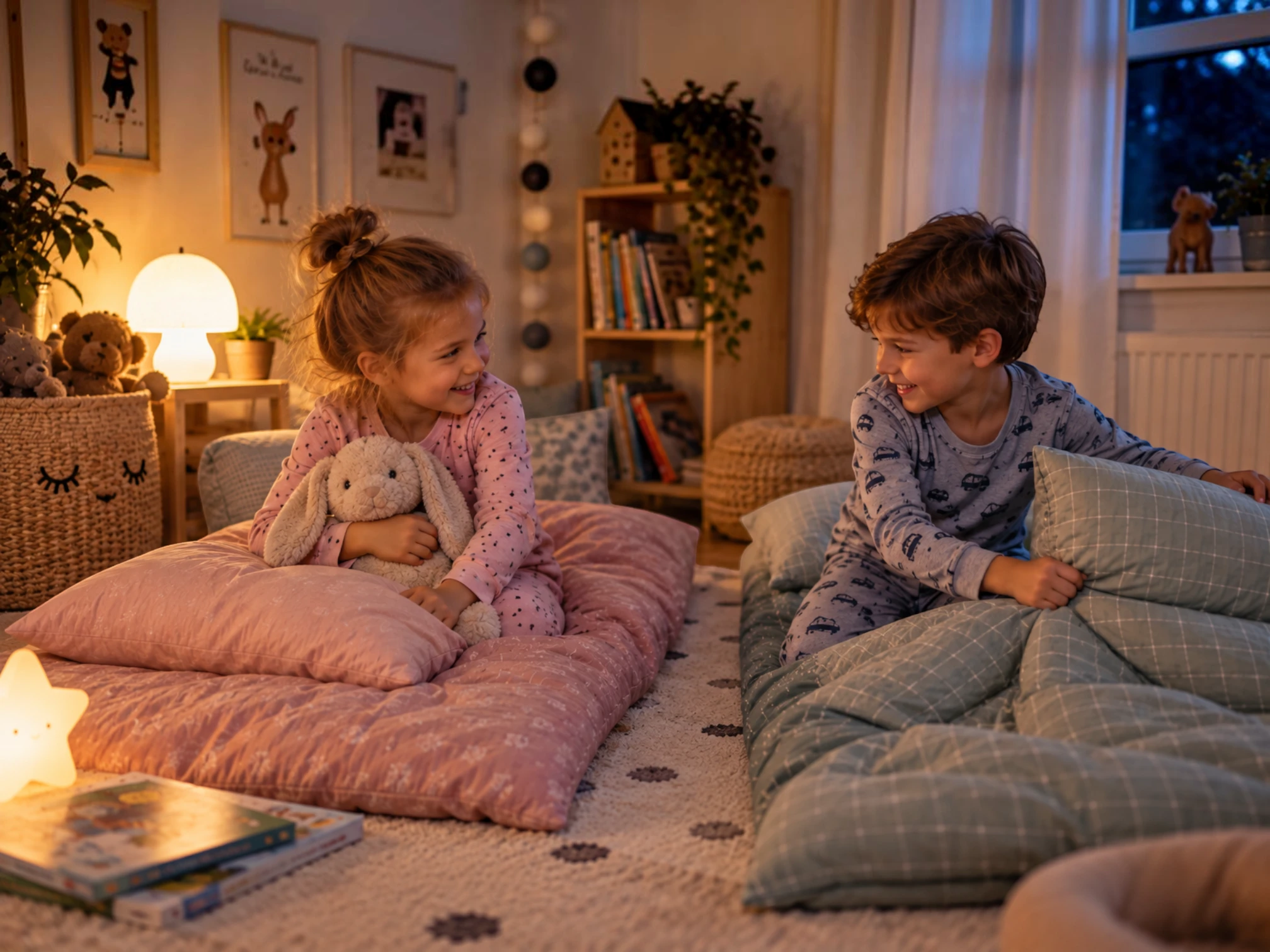
The sleeping space for your overnight guest should ideally be ready before it gets late. The child should know that they have their own blanket, a pillow and a designated place to sleep. If they have brought their favourite cuddly toy, a familiar blanket or their own pillow from home, it can naturally come to bed with them. A familiar object can help an unfamiliar bedroom feel a little more like home in the evening.
Do not try to stick to the usual bedtime at all costs, either. A sleepover with friends is something special, after all. Whispering after the lights go out, giggling under the covers and conversations that supposedly need just “five more minutes” are all part of the adventure.
Even so, it is worth keeping some elements of the familiar bedtime routine: brushing teeth, putting on pyjamas, dimming the lights and gradually winding down. Particularly during a first sleepover at a friend’s house, a familiar sequence can help a child feel secure in unfamiliar surroundings.
By this point, a very practical question arises: Where will our little guest actually sleep?
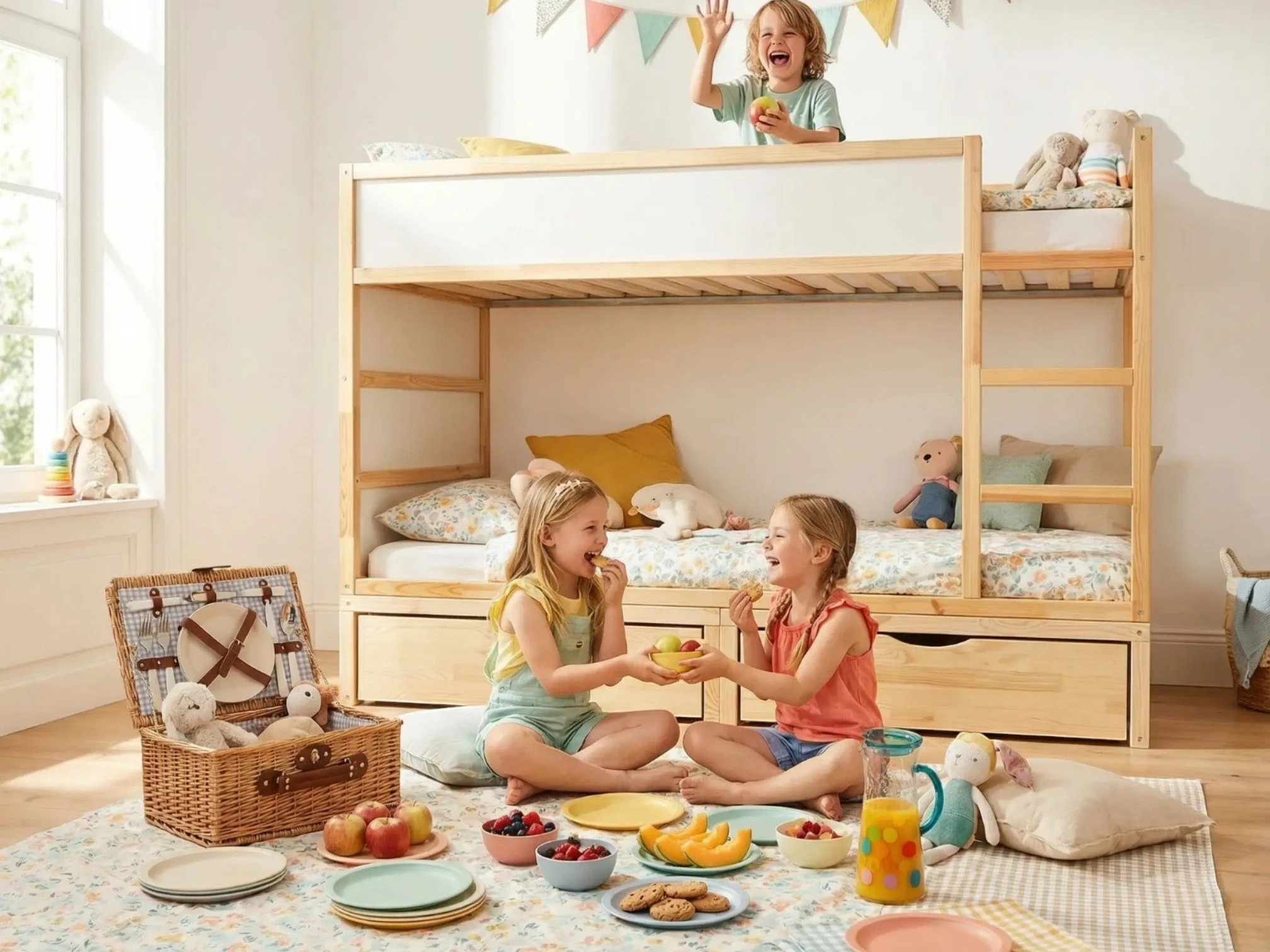
For occasional sleepovers, every child’s room does not need a permanent second bed. An extra sleeping space can be made available only when it is needed — for example, an additional mattress, a pull-out guest bed or a second sleeping space that tucks neatly under the child’s bed during the day.
Frequently asked questions
Is my child ready for their first sleepover with friends?
There is no particular age at which every child is ready. What matters is whether your child wants to stay overnight, knows their friend’s family well and feels safe there.
What if my child suddenly wants to come home?
Make it clear beforehand that they can call and come home at any time. Feeling homesick is not a failure — even if the child has spent days looking forward to the sleepover.
Should I call my child during the sleepover?
Not necessarily. If you have agreed that the other parents will contact you if there is a problem, an extra call could even trigger homesickness. It is best to agree beforehand when and how you will get in touch.
What should I know about the friend’s family?
Especially before a first sleepover, parents can certainly ask who will be at home, where the children will sleep and how the parents can be reached during the night. These arrangements provide reassurance — for both the child and the parents.
Good to know
Children’s friendships need time.
Friendships develop beyond nursery and school, too. Playing together, sharing meals, having small adventures and, eventually, perhaps a first sleepover give children the opportunity to get to know each other better outside their usual routines.
Our recommendation
Deliberately make room for friendships — particularly for children without siblings.
Longer afternoons together or a sleepover with friends give children many experiences that everyday life often leaves little room for. They decide together what to play, share their belongings and their space, sometimes have to wait, find compromises and consider each other’s wishes.
For an only child, deliberately creating opportunities like these can be particularly valuable. Friends are not there to replace siblings, but close friendships can offer children another form of closeness and companionship.
A sleepover is therefore much more than a night in a different bed. It can create a shared memory — and make a childhood friendship a little stronger.
Suitable Solutions for Your IKEA KURA Bed
IKEA KURA bed pull-out bed 90×180 cm NestUp Sleep 2-in-1 drawer in white
KEA KURA bed 2-in-1 sleeping drawer 90×180 cm NestUp Sleep in natural wood