Shipping available to Belgium, Denmark, the Netherlands, France, Spain and Italy. For Germany, Austria and Luxembourg, please visit https://ilovekura.de/.
A Room of Their Own: How a Child’s Room Can Foster Your Child’s Independence
How does a child's own room foster independence and a sense of responsibility?
Lumo: A child’s own room can foster independence when the child is allowed to help shape it and gradually take on responsibility. They experience: “These are my things. I get a say in how I use them and how I look after them.” This takes time, practice and parents who offer guidance without dictating every move.
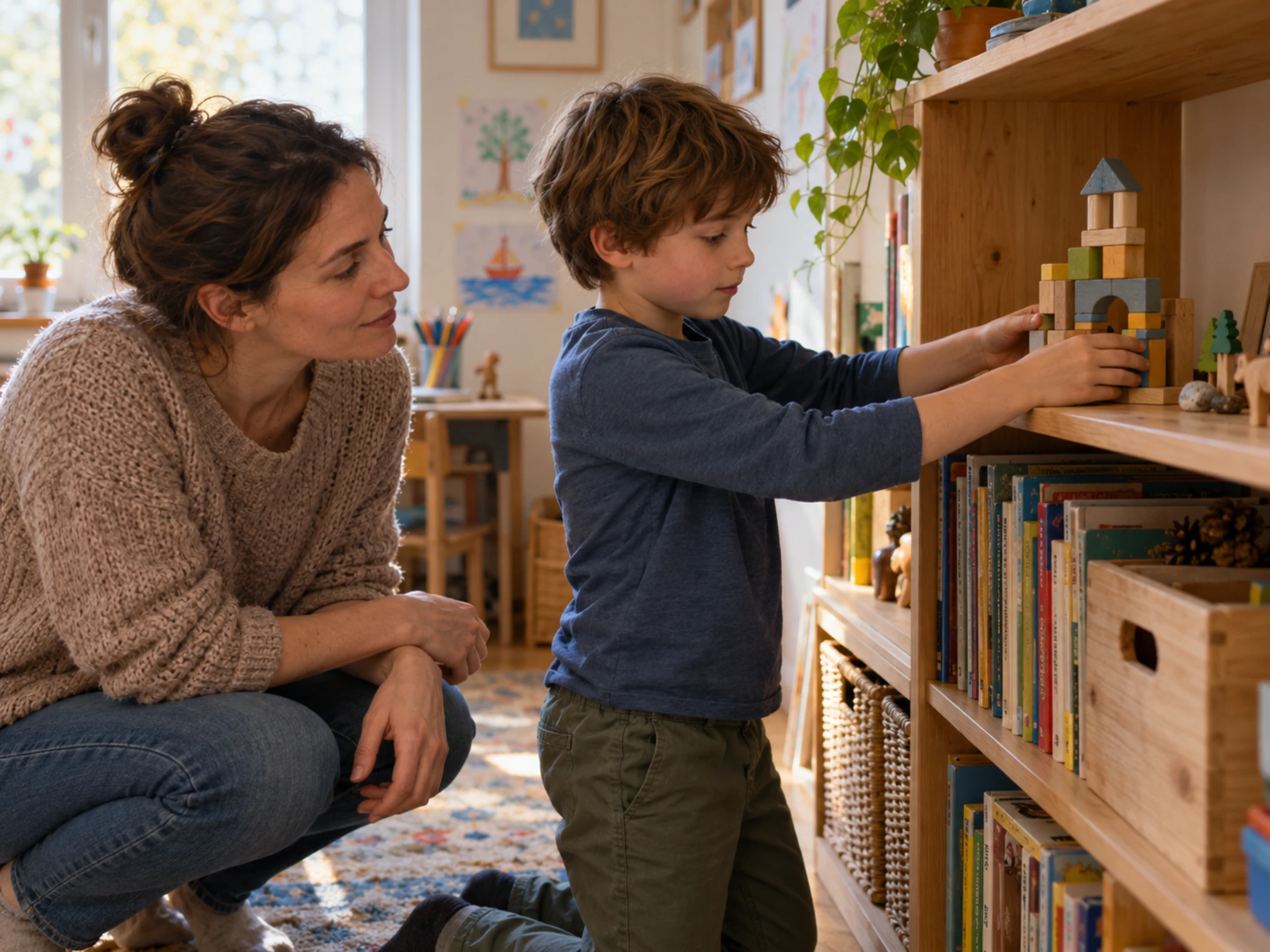
Responsibility means more than tidying up. It also means handling books carefully, putting the lids back on the pens after drawing, or noticing that a toy box is damaged. The child learns to perceive their surroundings consciously and to take care of the things that matter to them. A model they built themselves, for example, gets a protected spot so that it doesn’t accidentally get broken the next time they play.
In everyday life, small, understandable tasks that suit the child’s age and abilities help. “Take care of your room” is very general. “Please find a place where your construction can stay until tomorrow” gives a concrete task and still leaves room for a decision of their own. This way the child can try things out, find a solution and experience that their contribution counts.
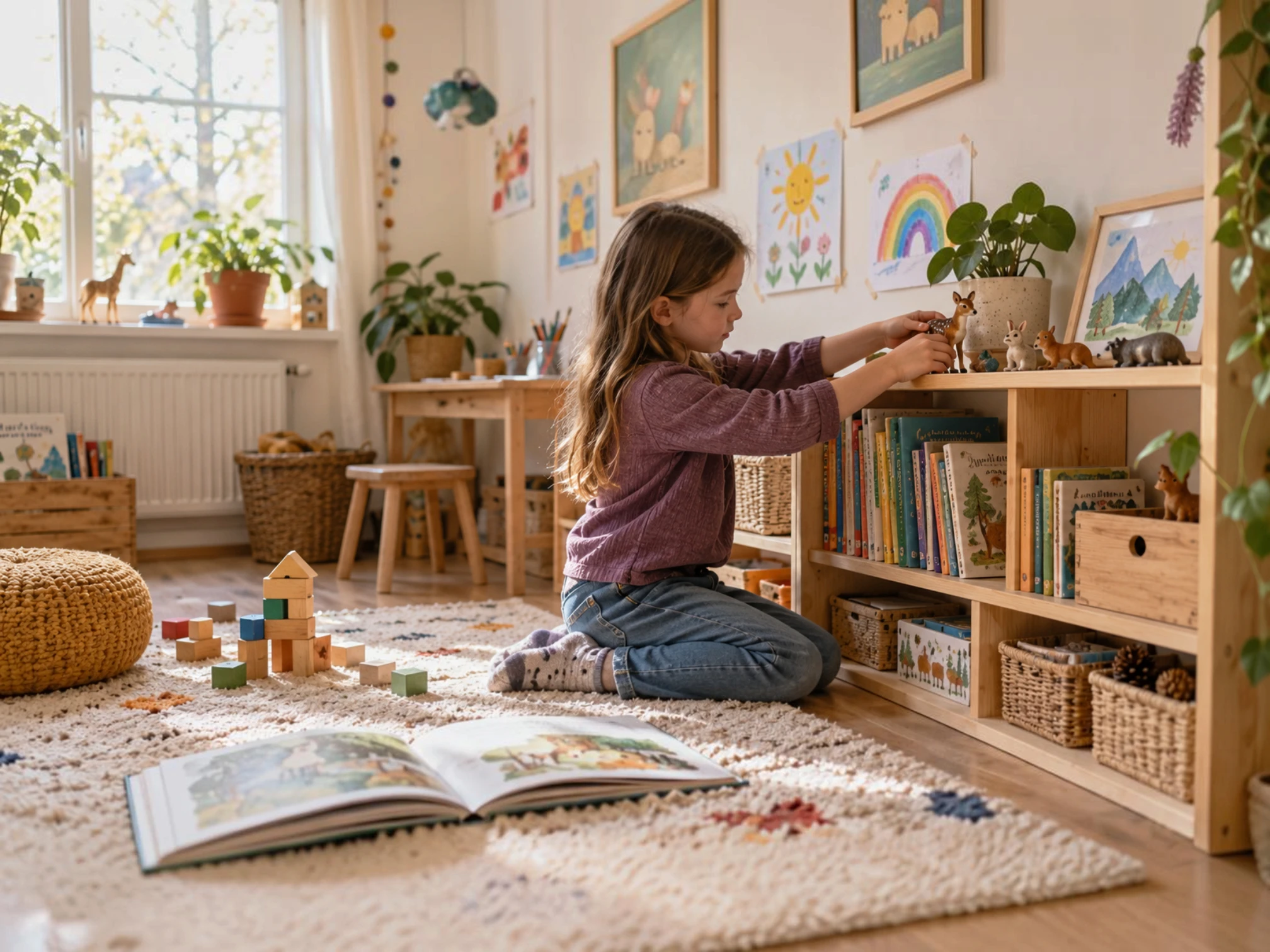
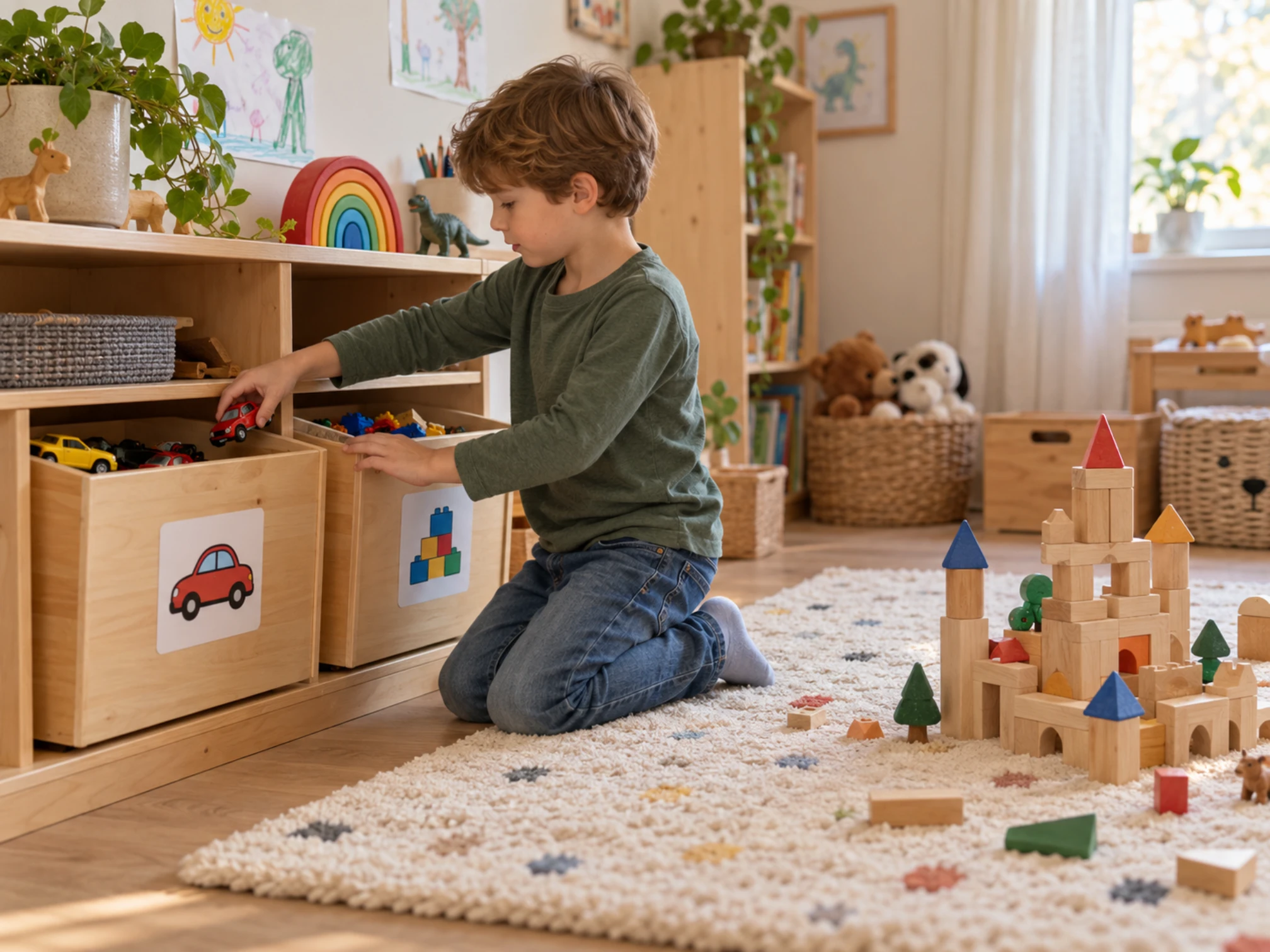
The design of the room also plays a role. Can the child reach their books themselves? Can the toy box be opened without help? Is there a place for things they especially want to protect? Anyone who is expected to take on responsibility needs an environment in which independent action is possible. Parents can look together with the child at what already works and where support is still needed.
Not everything will succeed right away. A toy gets left lying around, something goes missing or an idea turns out to be impractical. Instead of taking the task back straight away, parents can ask: “What happened? What could help you next time?” This turns a mishap into an opportunity to think together and try a different solution.
A room of their own alone does not make a child independent, however. What matters is that the child gets real, manageable opportunities to have a say and to share responsibility. This is also possible in a shared sibling room: with their own shelf, a personal drawer or a small corner that they get to decide about. They don’t have to manage everything on their own – but they should be allowed to experience what they can already do themselves.
Why does a child move so much in their sleep?
Many parents are surprised when they find their child in a completely different sleeping position in the morning than in the evening. In fact, this is perfectly normal. A child moves in their sleep much more often than an adult – and this is part of healthy development.
During the night, the brain processes the day’s experiences, muscles and bones regenerate and the body keeps growing. At the same time, children keep changing their sleeping position. They turn onto their side, sleep on their stomach, stretch out their arms and legs or slide across the mattress without noticing.
There are several perfectly natural reasons for this:
✔️ Children automatically look for a more comfortable sleeping position.
✔️ During REM sleep phases, they move much more often than adults.
✔️ Their body and nervous system keep developing continuously.
✔️ They react to temperature, noises or other stimuli from their surroundings.
✔️ Control over their own posture during sleep only develops with increasing age.
The more active a child is during the day, the more they often move at night as well. Tossing, turning or sliding around on the mattress are therefore no cause for concern. What matters much more is that the sleeping area offers enough freedom of movement and is designed so that a child can move freely and sleep safely.
How does a child’s own room help them shape their free time themselves?
Lumo: In everyday life, adults often decide when something starts and what happens next. Free time in the child’s room gives the child the chance to think for themselves: “What do I feel like doing right now?” Perhaps they want to build, draw, look at a book or simply lie on the rug for a while. In doing so, they can practise developing their own ideas and making decisions.
A clear environment makes this choice easier. If books, pens and toys are within reach, the child does not have to ask for help for every activity. This doesn’t require constantly new offerings. Familiar things can be used in different ways again and again: today the building blocks become a city and tomorrow a home for their favourite animals.
Even a “I’m bored” doesn’t have to be answered right away with a ready-made programme. Parents can first leave some space or ask: “Would you like to build something today or rather make something creative?” Sometimes a small nudge helps, sometimes the child needs company. Shaping free time independently does not mean that they must be able to occupy themselves at all times.
What matters is that not every free minute is planned. The child may start something, change their plan and also take a break. This gives them the chance to find out which activities they enjoy – and to increasingly shape their free afternoon themselves.
Why should children be allowed to help shape their room and have a say in changes?
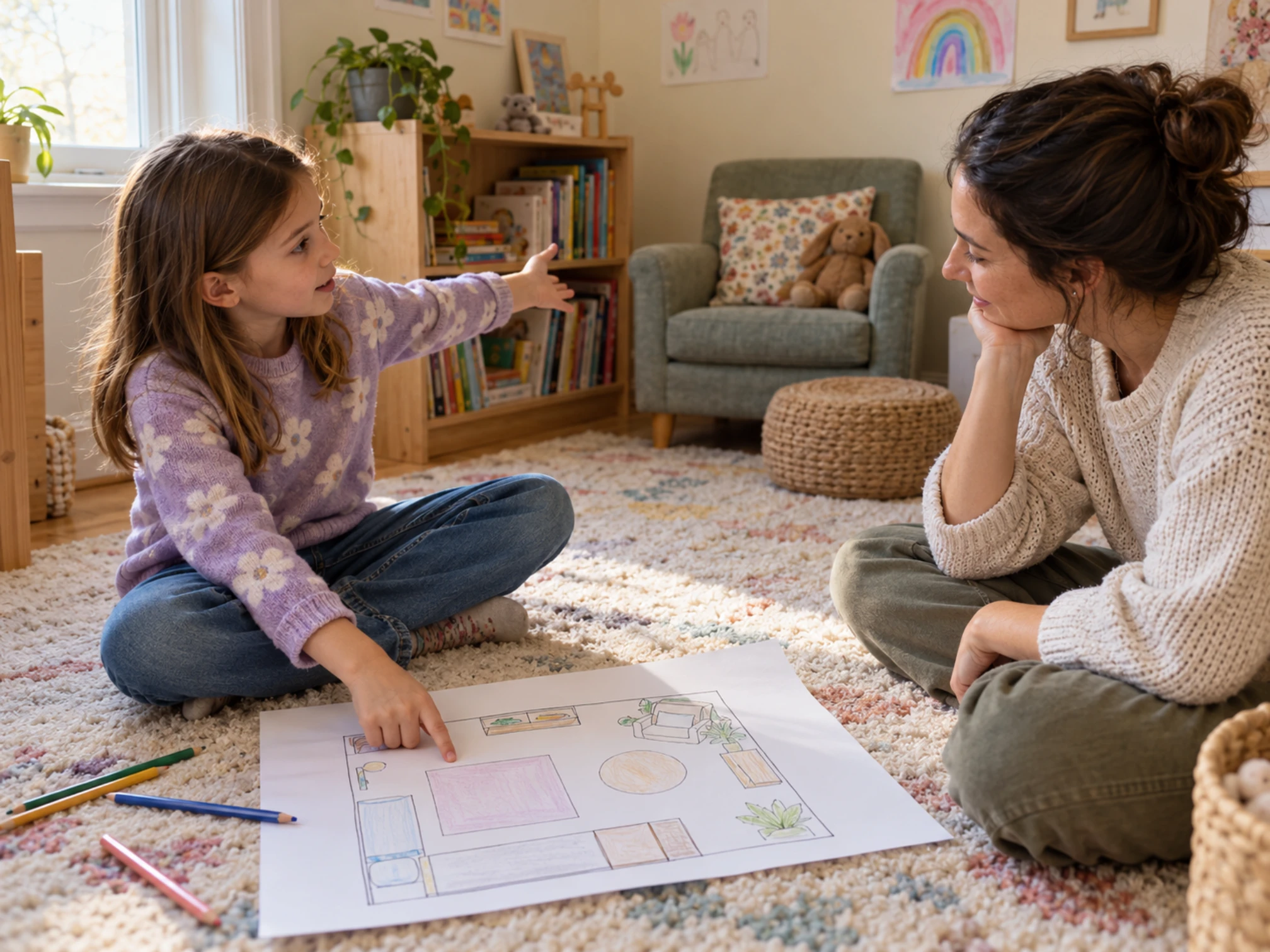
Lumo: Adults often furnish a child’s room with great care. They choose colours, furniture and decorations and think about what is practical. But whether the room feels good in everyday life is something above all the child experiences. When we ask them about their wishes, we give them the chance to notice and express their own needs.
Perhaps they say: “I don’t like playing here” or “I’d like to have my bed somewhere else.” Behind this there may be a concrete wish: more space for building, a quieter corner for reading or the chance to look out of the window while drawing. Instead of judging the suggestion straight away, it is worth asking: “What would be better for you then?” This way parents and child find out together what it is really about.
Helping shape the room means more than choosing between two wall colours. The child can think about which things they need every day, which pictures they would like to hang and where their favourite activities should find a place. A child who loves crafting may want a free work surface. Another may want to be able to leave their animal figures standing without having to put them away every evening. Not every child’s room needs the same areas.
Even a room that has already been set up is allowed to change. Interests grow, some toys lose their significance and new activities come along. What worked well two years ago doesn’t have to fit today. If the child wants to rearrange, parents can help to check the options and try out a change. Sometimes it is enough to use a shelf differently or to move an armchair.
Of course, the adults remain responsible for safety, budget and practical implementation. Not every wish can be fulfilled. An understandable “That doesn’t work here, but we could try it this way” still takes the child’s idea seriously. Decisions become comprehensible as a result, and alternatives emerge together.
A child’s room doesn’t have to match the parents’ taste down to the last detail. It is allowed to show who lives there. When a child experiences that their wishes are heard, they can practise saying: “I like this. I need this. I’d like to change this.” And they learn that they are allowed to get support with it.
What does it mean for a child to be allowed to shape their own little world?
Lumo: For a child, a room can be many things at once: a research station, an animal clinic or a cosy retreat. What adults see as furniture and toys takes on a meaning of its own through the child’s imagination. When children are allowed to make their ideas visible in the room, they can express their interests and personality.
This also includes things that, from an adult’s perspective, don’t go together: dinosaurs next to a dollhouse, self-painted pictures between animal posters or a collection of unusual stones. The room doesn’t have to follow a uniform decorating theme. It is allowed to show what currently occupies and excites the child.
Parents can show interest without taking over the design: “Tell me what you’ve set up here.” Or: “Which spot would you like for your collection?” This gives the child the chance to explain their thoughts and let others take part in their world. At the same time, they get to decide which treasures they want to show and which they would rather keep in a personal drawer.
This little world is allowed to change. A play corner may become a drawing spot, a hideout a reading area. Not every change needs new furniture. Often a different place for familiar things and the willingness to try something together are enough.
This also applies in a sibling room. A wall area of their own, a shelf or a personal corner can offer space for individual ideas. What matters is the experience: “There is room here for me and for what matters to me.”
A child’s room is allowed to grow with your child
A room supports independent action when children can understand it, use it and help shape it. This doesn’t require perfect furnishing, but suitable opportunities in everyday life:
Trusting them with responsibility: Hand over small tasks and offer support.
Developing order together: Keep things within reach and agree on understandable places.
Leaving free time: Allow their own play ideas, decisions and breaks.
Taking needs seriously: Ask, listen and think about changes together.
Making personality visible: Leave room for favourite things, imagination and changing interests.
Not everything has to stay the way adults once set it up. A child’s room is a living space that parents and child are allowed to keep developing together.
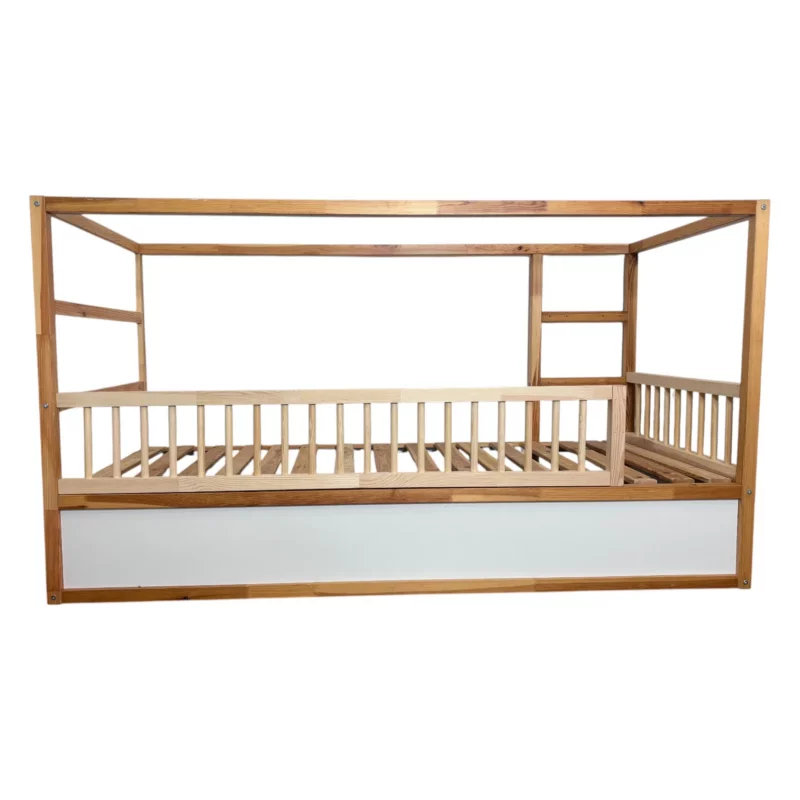
Suitable Solutions for Your IKEA KURA Bed
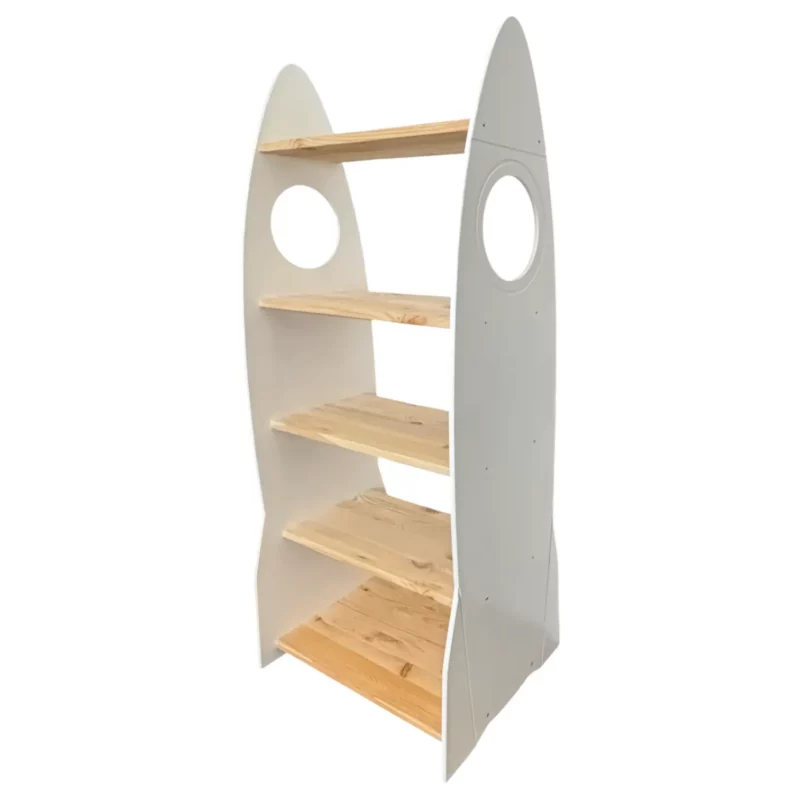
IKEA KURA Bed Montessori Shelving Unit RAKIETA MIDI White
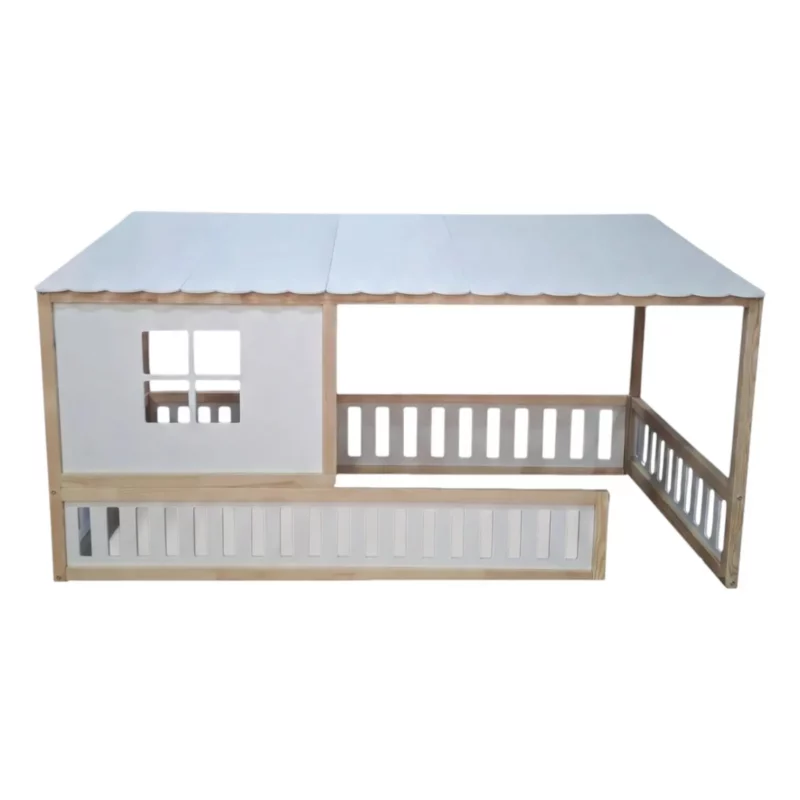
IKEA KURA House Bed with One Window Little Mountain Plus