Pourquoi les enfants construisent-ils des cabanes ? Ce qu’ils trouvent vraiment dans leur petit refuge
Sommeil et routine du soir

Pourquoi les enfants construisent-ils des cabanes ? Ce qu’ils trouvent vraiment dans leur petit refuge

Home » Blog » Pourquoi les enfants construisent-ils des cabanes ? Ce qu’ils trouvent vraiment dans leur petit refuge

Pourquoi les enfants construisent-ils des cabanes ?

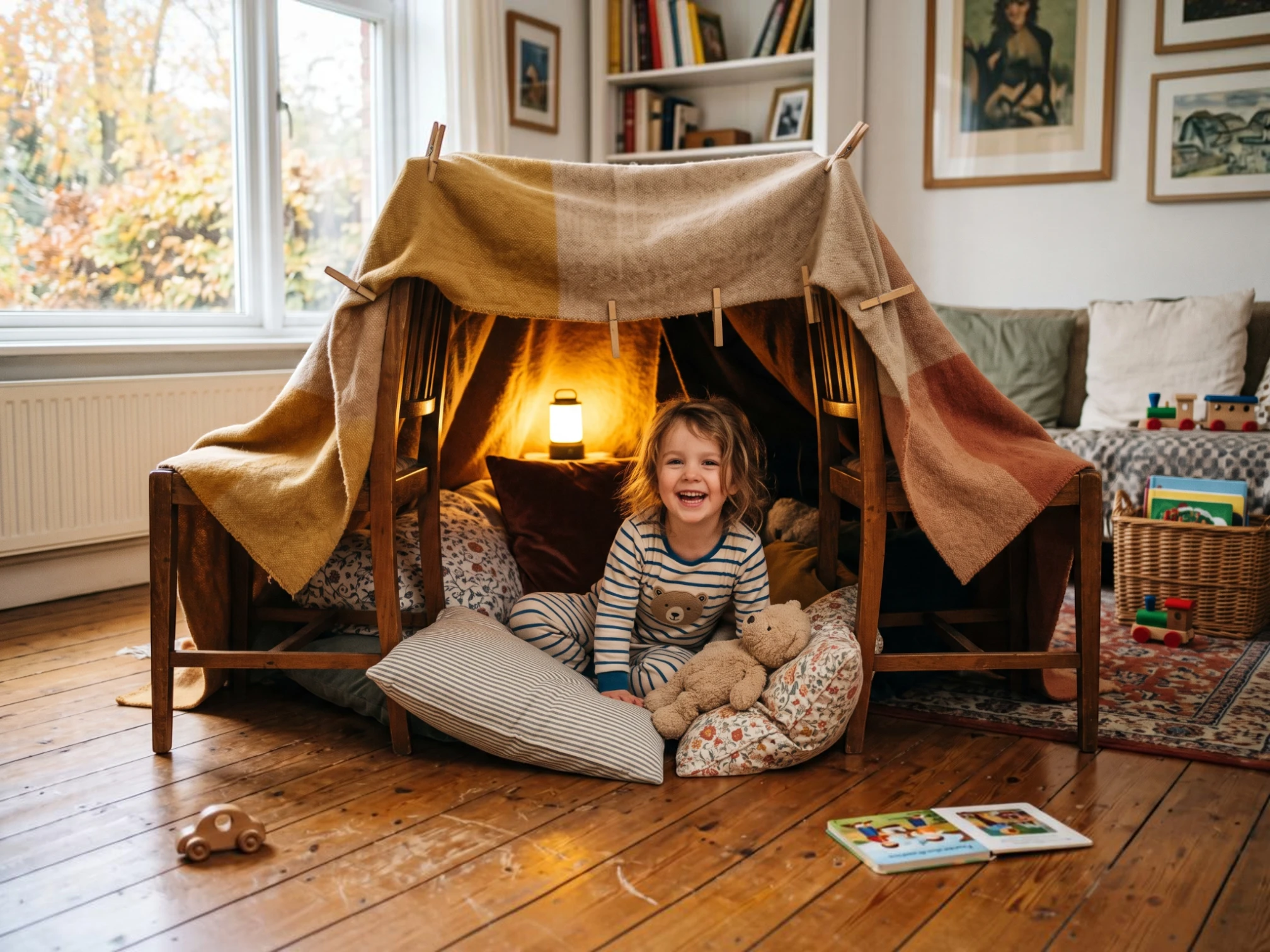
Two chairs, a large blanket and a few cushions are all it takes. In no time, the children’s room becomes a spaceship, a castle or a secret headquarters that adults may enter only with permission. To parents, it often looks like extra mess. To the child, it is a place they have created entirely according to their own ideas.

Children enjoy finding small, sheltered spaces because they give them a sense of security and control. In a world where adults make most of the decisions, having a den of their own becomes something very special. The child decides where the entrance goes, what belongs inside and whom to invite into their hideaway.

Building a den is also part of what is known as symbolic play. A blanket suddenly becomes much more than a blanket, and the space under the bed turns into a cave, a shop, a house or a spaceship within moments. This requires neither expensive toys nor a ready-made play idea — the most important part comes from the child’s imagination.

That is why it is worth resisting the first impulse to tidy everything away immediately. What looks like a random construction to adults may, at that moment, be the most important place in the child’s entire world of play.

Qu’apprend un enfant en construisant des cabanes ?

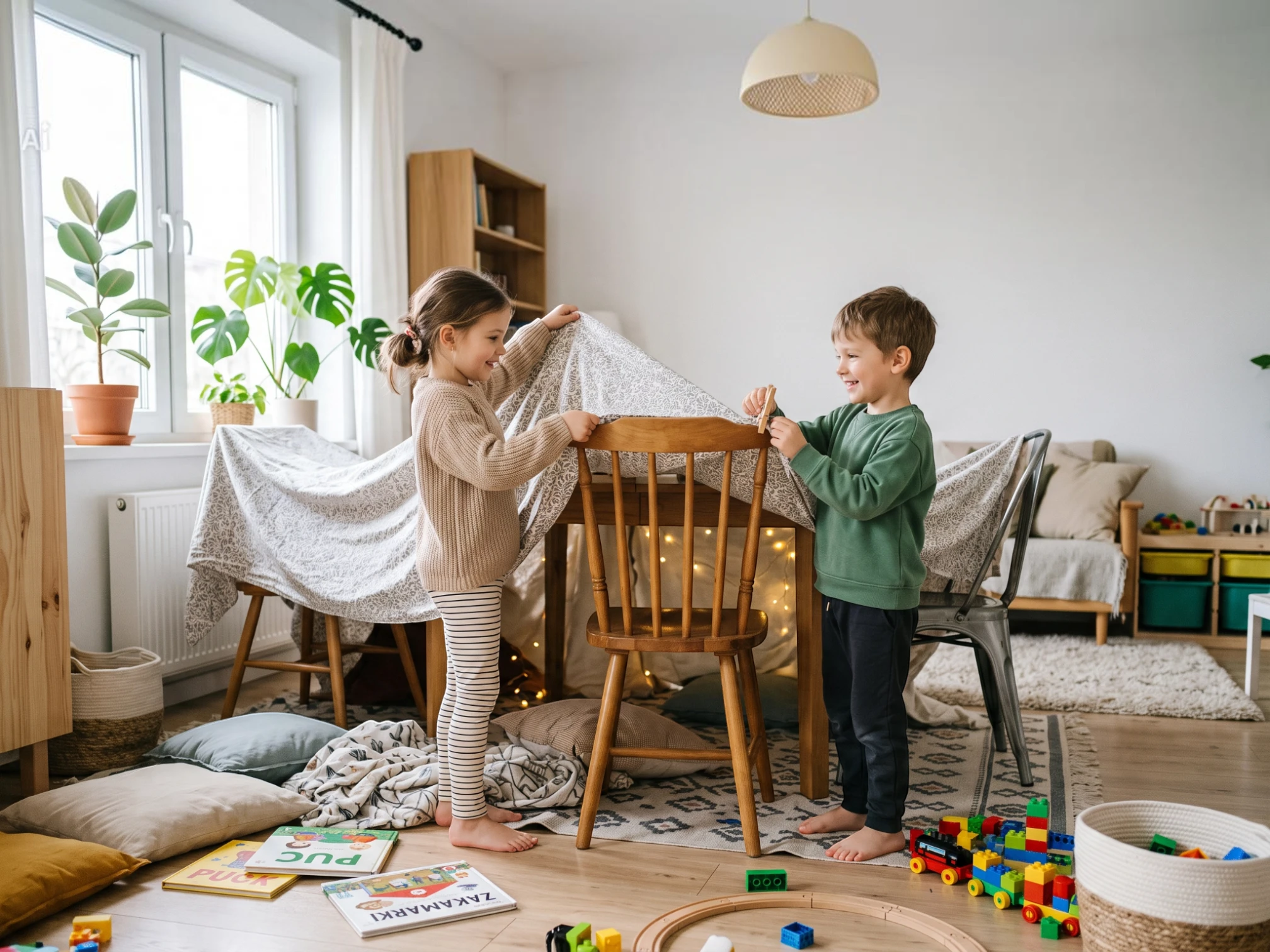
Building a den looks like free play, but it actually requires the child to make many decisions. They need to choose a suitable spot, gather materials, plan a structure and check whether the blanket stays in place. If the first idea does not work, they improve it or start again. In this entirely natural way, the child practises planning, staying patient and solving problems independently.

Once the den is finished, it takes on a story of its own. Sometimes it is a rocket heading to the moon; at other times, it is an animal clinic, a shop or a castle. A single object can serve many different purposes, and the game changes without constantly needing new toys. This is where the child’s imagination really flourishes.

When children build a den with siblings or friends, they also learn to work together. They need to agree on what the structure should look like, share out tasks and decide who may enter the hideaway. Of course, disagreements sometimes arise. But negotiating rules and finding a solution together are also important experiences that come with this kind of play.

The greatest value, however, lies in independence. The child sees the result of their own idea: they have created something from scratch, corrected mistakes and given ordinary objects a new meaning. Experiences like these strengthen their sense of self-efficacy — the belief: “I can come up with an idea and make it happen myself.”

A child’s den isn’t a mess.
It is a place they have created themselves for playing, dreaming and winding down.

How can you support den building without turning the whole home into a playground?

Parents do not have to let their child take over the entire living room or step over chairs and blankets every day. It is enough to designate a specific area where a den can be built without the child having to ask permission each time. This gives the child freedom while keeping shared spaces manageable.

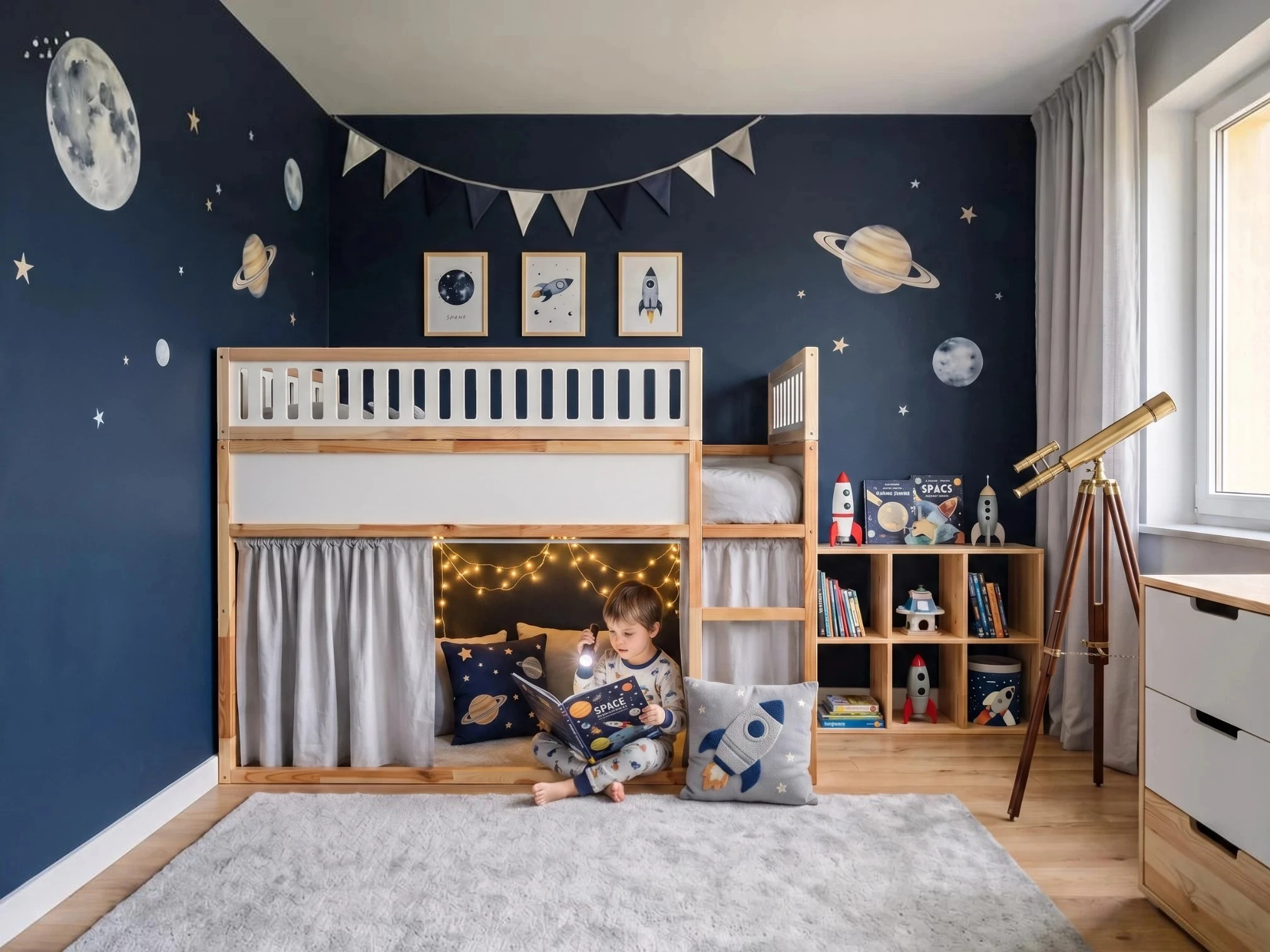
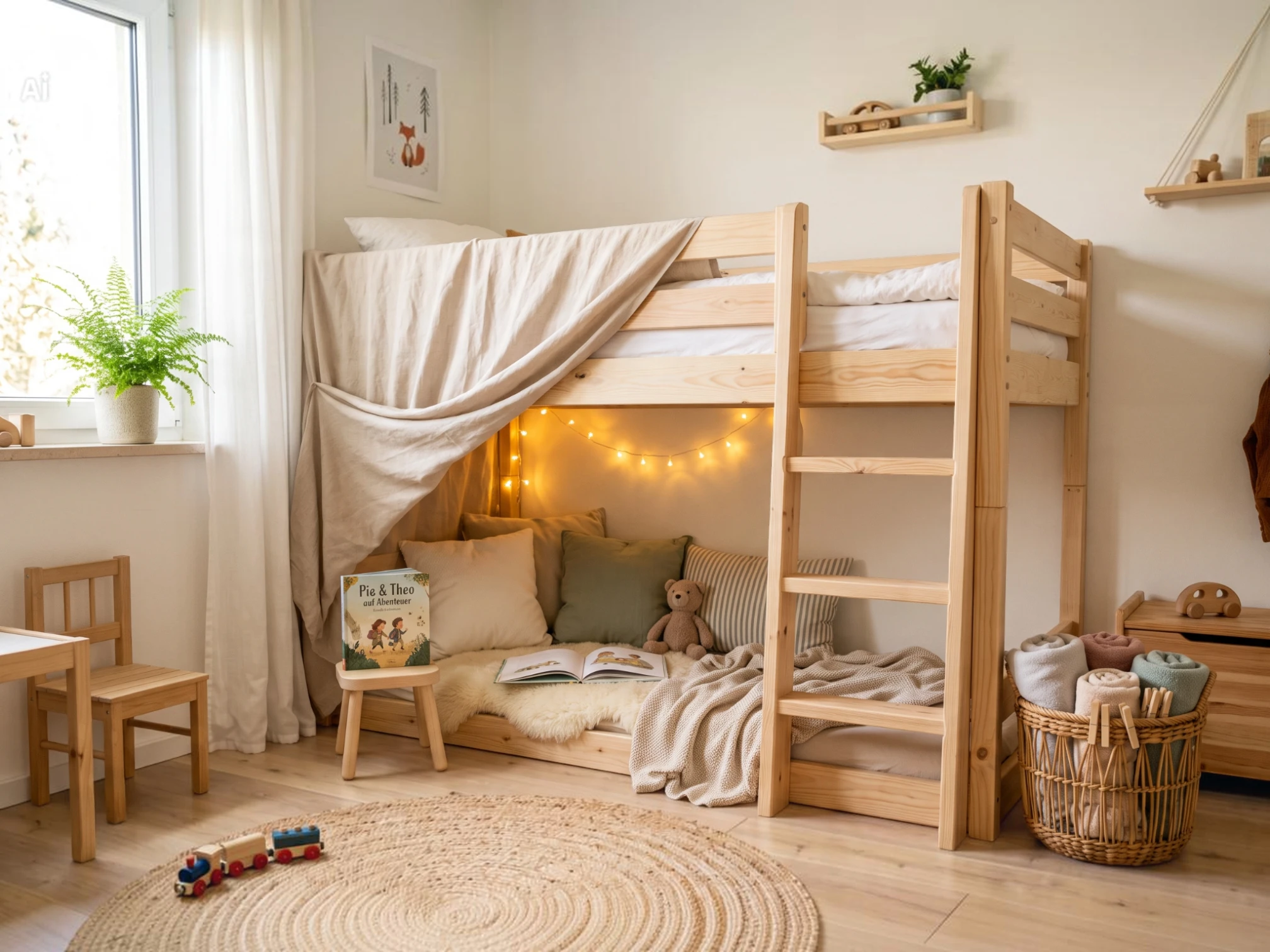
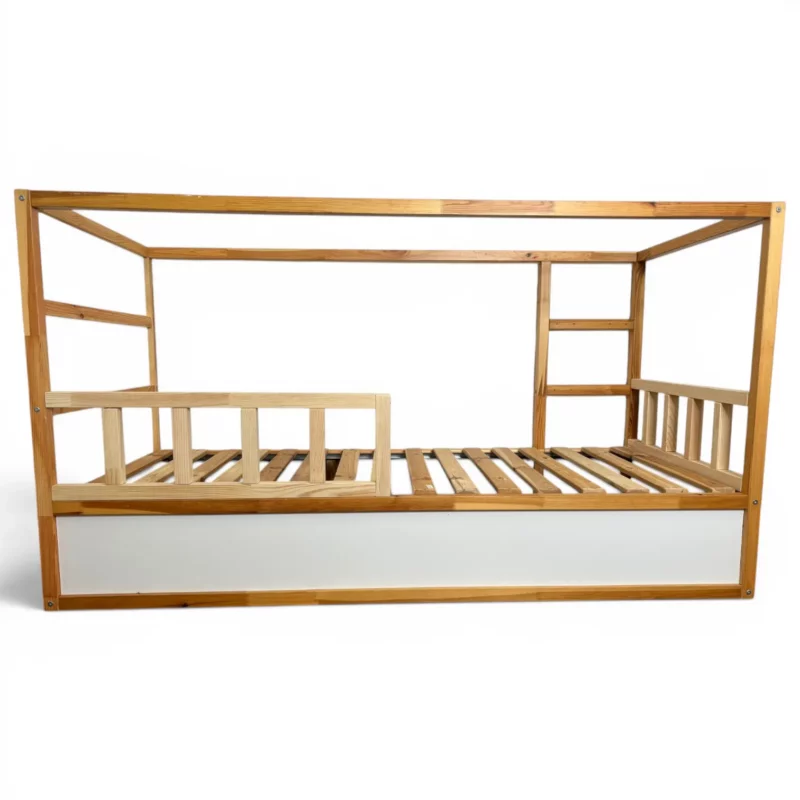
The open space beneath the IKEA KURA bed in its raised position is a good option. This area has clear boundaries, takes up no additional floor space and can change again and again with the child’s ideas. One day, it becomes a spaceship; the next, a shop, a theatre or a quiet reading corner.

A few simple rules can help:

  • A designated spot: The den is built in a specific area of the children’s room, for example under the bed.
  • A safe structure: Use lightweight blankets and stable supports that cannot fall onto the child or tip over.
  • Clear access: Fabrics must not block the ladder, the door or the way out of the room.
  • Safe lighting: A small lamp or LED lights that do not get hot are suitable for use inside.
  • A box for accessories: Blankets, clips, cushions and a torch have a designated storage place after play.
  • Tidying up together: The den can stay up for longer. After playing, however, the child helps tidy the surrounding area.

It is important to let the child shape the den rather than designing every last detail for them. Adults can provide a safe space and the materials needed. But the child should be free to decide what their den will become this time.

Frequently asked questions

Why do children keep building dens?

Small, sheltered spaces give many children a sense of comfort and security, along with the feeling that they can make decisions about an area of their own. At the same time, every new den offers room for different stories and play ideas.

Should a child’s den be allowed to stay up for longer?

If it does not block walkways, doors or the ladder, it can stay up for a few days. This allows the child to develop their play idea further. Agreed tidying rules prevent the den from spreading uncontrollably throughout the room.

Which materials are suitable for building dens?

Lightweight blankets, bedsheets, cushions, fabric clips and a torch are usually all that is needed. Heavy objects, unstable furniture and long, loose cords should not be used.

How can the space under the IKEA KURA bed be used?

The open area beneath the KURA bed in its raised position provides a clearly defined space for a child’s den. With lightweight fabrics, cushions, books and an LED lamp, it can become a new world of play again and again.

Good to know

A child’s den does not have to look perfect or be permanently furnished. Its special value comes from the child planning it, changing it and filling it with their own stories.

Adults provide a safe setting — imagination takes care of the rest.

Our recommendation

Instead of building a finished, permanently furnished den for your child, provide a box of lightweight blankets, cushions, fabric clips and a torch. Choose a safe spot together, for example under the IKEA KURA bed, and let your child decide what to create there this time.

A spaceship today, a theatre, a shop or a secret reading corner tomorrow.

Suitable Solutions for Your IKEA KURA Bed

Barrières de sécurité inférieures NIVO DUO 90+90 pour lit IKEA KURA

NIVO

Timeless design and versatile use.

Barrière de sécurité inférieure ROLO 90 pour lit IKEA KURA

ROLO

Gentle, rounded shapes for a harmonious look.

Protection antichute inférieure VELO DUO 90×90 pour lit IKEA KURA en bois et MDF

VELO

Modern design with closed elements for extra protection.