Creating a natural children’s room: What solid wood and natural really mean
Natural Children’s Room

Creating a Natural Children’s Room: What “Solid Wood” and “Natural” Really Mean

Home » Blog » Creating a Natural Children’s Room: What “Solid Wood” and “Natural” Really Mean

“Natural” sounds good. But what does it actually mean?

“Natural material”, “inspired by nature”, “natural living” — parents constantly encounter phrases like these when furnishing a child’s room.

At first, they sound reassuring.

But before choosing a piece of furniture, it is worth asking a much simpler question:

What is it actually made of?

There are significant differences in construction and processing between furniture made from solid pine, an MDF board and a product that combines several materials.

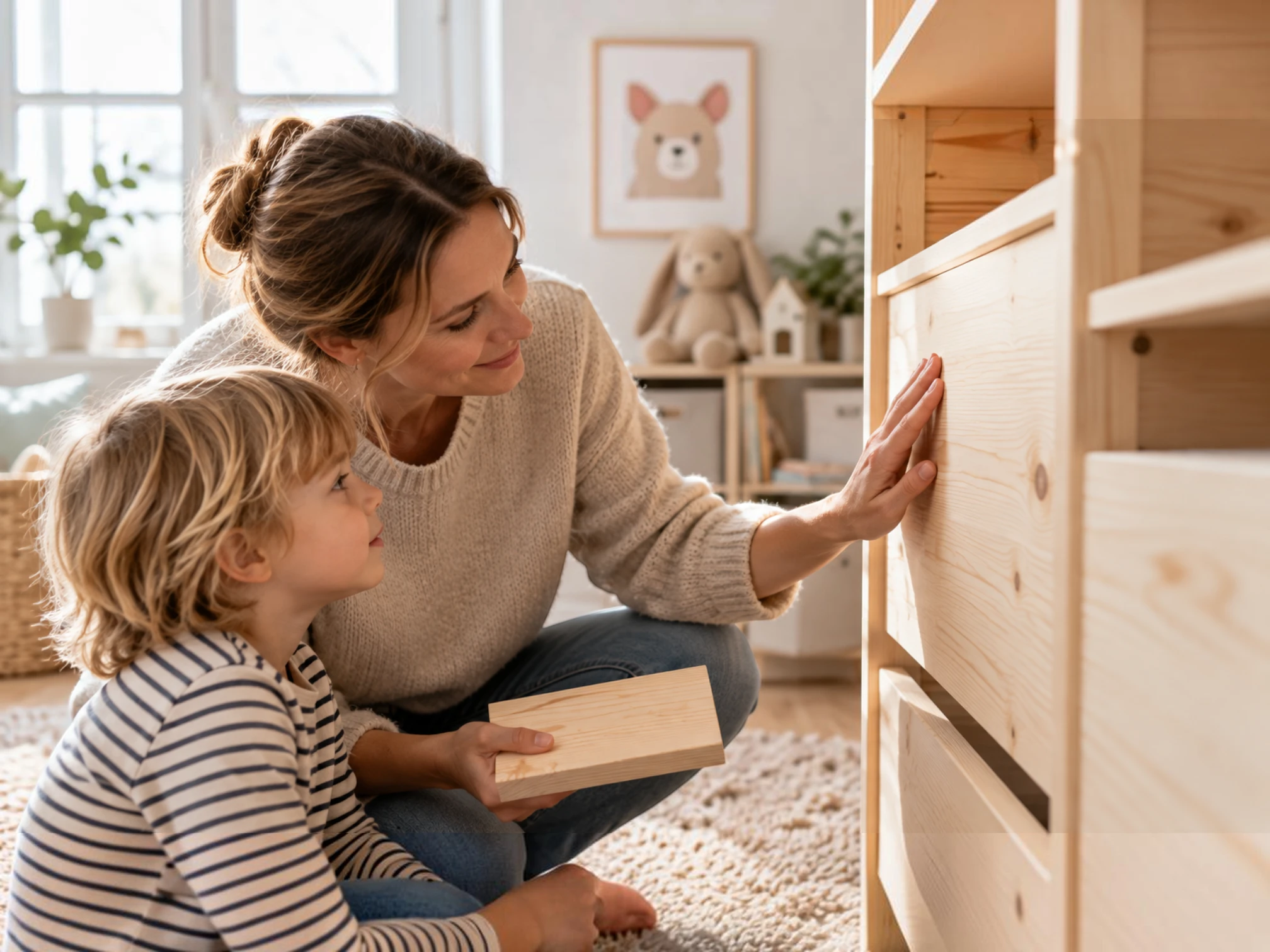
In a child’s room, it is therefore worth looking beyond colours, shapes and attractive product images. Children sleep here, play on the floor, build dens, fill and empty drawers, and touch their furniture every day.

Anyone wishing to create a natural children’s room should therefore start with the material before considering the style.

What does solid wood mean? What is MDF? What does the term “engineered wood” cover? Is untreated wood automatically the better choice? And what can certification labels actually tell us?

The more precise the material description, the more informed parents’ decisions can be about what goes into their child’s room.

Solid wood, MDF, particleboard — what are they?

These terms appear frequently when buying furniture. However, for someone who does not work with furniture production and wood every day, the differences are not always obvious.

Solid wood refers to timber from a tree, rather than boards manufactured from wood fibres or chips. Depending on the construction, individual solid wood components may be joined or glued together. “Solid wood” therefore does not automatically mean “a single piece of wood without any joints”.

Engineered wood is a collective term for materials made from wood components — such as fibres or chips — which are then processed into boards.

MDF, or medium-density fibreboard, is one of these engineered wood products. It is made from very fine wood fibres pressed together with binders to form a uniform board.

Particleboard is also made from wood components and binders. Unlike MDF, it uses coarser wood chips.

None of these terms alone tells us whether a piece of furniture is “good” or “bad”. It first tells us something much more specific:

What was the furniture made from?

This information matters because binders are used in the manufacture of engineered wood, and certain engineered wood products can be a source of formaldehyde emissions into indoor air.

Since 6 August 2026, a new uniform regulation on formaldehyde emissions has applied in the European Union. Furniture and wood-based products must not be placed on the market if, under the specified testing conditions, the formaldehyde concentration exceeds the applicable limit of 0.062 mg/m³.

This does not mean that engineered wood is inherently problematic. Products placed on the European Union market must meet the applicable requirements.

It means that:

Anyone who wants to know what is in their child’s room should look at the actual material description, rather than relying solely on the word “natural”.

Sources:

German Environment Agency — Information on formaldehyde and emissions from engineered wood

EUR-Lex — Regulation (EU) 2023/1464

“Natural” is an appealing word. An accurate material description provides better information.

Frequently asked questions

You do not have to be an expert in wood or furniture production to ask the right questions before buying.

What is the furniture made of?

Look for specific descriptions such as solid pine, beech, MDF, particleboard, or a precise description of the different materials used together.

Terms such as “wood effect”, “natural” or “inspired by nature” do not replace a material description.

Has the surface been treated?

It is worth checking whether the wood is unfinished, lacquered, oiled or has another surface finish.

Untreated wood allows you to decide how to finish the surface later. However, this does not automatically mean that every product subsequently applied is suitable for a child’s room. Here, too, it is worth taking a close look at the product you choose.

Is there an independent certification label?

The absence of a certification label does not automatically mean that a product is poor quality. Equally, an independent certification label is not a meaningless marketing symbol.

Labels such as Blue Angel or the eco-INSTITUT label can provide consumers with additional guidance when choosing low-emission products.

If a product does not carry such a label, this should also be communicated transparently.

Where does the wood come from?

The origin of the material can also be important information. The more specific a manufacturer is about materials, origin and processing, the easier it is for customers to understand what they are actually buying.

What does the manufacturer say — and what is left unsaid?

If a product description uses terms such as “natural”, “sustainable” or “environmentally friendly” without stating the actual material composition, it is worth asking.

A good material description should be more specific than an advertising promise.

Allow new furniture to air out first

The German Consumer Advice Centre recommends thoroughly airing out new furniture and mattresses before placing them in a child’s room.

This recommendation is not limited to a particular furniture material.

Source: German Consumer Advice Centre — Avoiding harmful substances in children’s rooms

How do we approach this at I LOVE KURA?

We want to be held to the same standard. That is why we describe the materials we use as specifically as possible.

For our wooden components, we use solid pine from the Podkarpacie region of Poland. Most of our wooden components are supplied unfinished and untreated. This allows parents to decide whether to preserve the natural wood surface or treat and finish the product to suit their child’s room.

Depending on the version, our drawers are finished with a clear or white water-based lacquer.

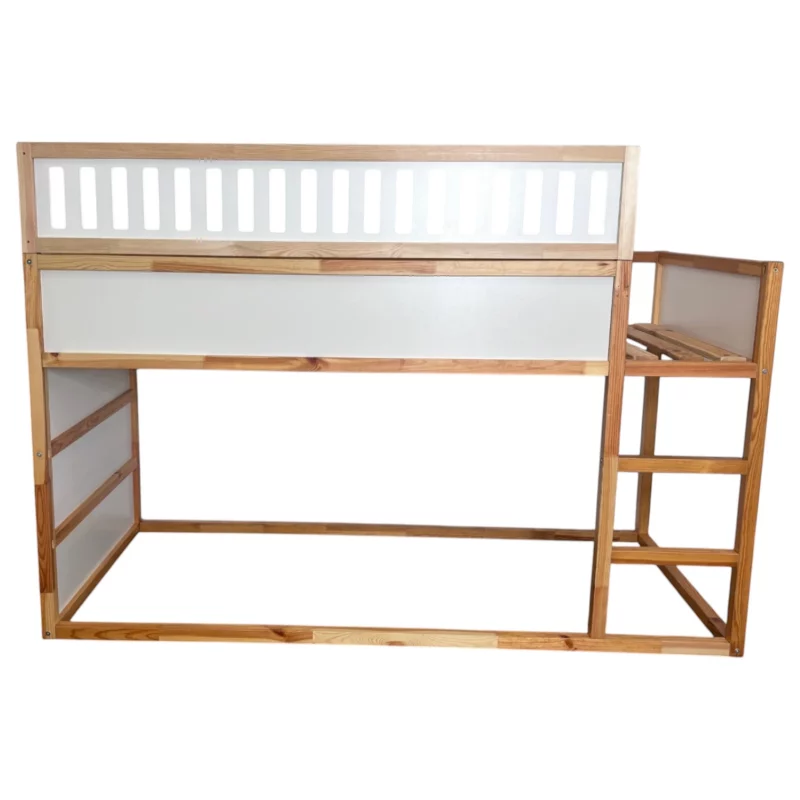
Not every I LOVE KURA product consists entirely of solid wood. In one of our safety rail designs, we combine a solid pine frame with an MDF panel. We naturally consider this information part of a transparent material description.

Our products currently do not carry an independent certification label or FSC certification. We also want to communicate this openly.

For us, material transparency does not mean making a product sound as “natural” as possible. It means describing what it is made of as accurately as possible.

What should parents look for in a safety rail?

What is the difference between solid wood and MDF?

Solid wood consists of timber from a tree. MDF is an engineered wood product made by pressing fine wood fibres and binders into a uniform board. The materials therefore differ in their structure and processing characteristics.

Is MDF inherently bad for a child’s room?

No. The material name alone is not enough to make that judgement. Since August 2026, new requirements for formaldehyde emissions have applied to furniture and wood-based products in the European Union. The properties and regulatory compliance of the specific product are therefore what matters, rather than the abbreviation “MDF” alone.

Is solid wood automatically free from harmful substances?

No. Natural wood can also release substances into indoor air. In finished furniture, processing, joints and any surface treatment also play a role. “Solid wood” is therefore important material information, but it is not a blanket assurance about health.

Does solid wood have to be lacquered?

No. Depending on its intended use, solid wood can remain unfinished or be treated. Anyone wishing to finish the surface themselves should consider which product they use and whether it is suitable for the intended application.

What does a certification label mean for children’s furniture?

An independent certification label can confirm compliance with certain requirements, for example regarding emissions or ingredients. Established labels can therefore provide additional guidance when buying 

Good to know

“Natural” does not replace a material description.

When choosing furniture for a child’s room, first look at its specific composition:

Solid wood? MDF? Particleboard? A combination of different materials? How was the surface treated? Is there an independent certification label?

Specific answers to these questions tell you more about a piece of furniture than the word “natural” in large green lettering.

Our recommendation

Ask questions.

What is the furniture made of? How was the surface treated? Which materials have been combined? Is there an independent certification label? Can the manufacturer clearly explain what you are actually buying?

If any of this information is missing, that can also form part of your purchasing decision.

This is precisely the transparency we aim to provide at I LOVE KURA.

That is why our product descriptions specify as clearly as possible which components are made from solid wood and where other materials are used.

Parents do not need perfect advertising promises to make an informed decision.

Suitable Solutions for Your IKEA KURA Bed

IKEA KURA Bed Safety Rail with Round Spindles ROLO 165

IKEA KURA bed safety rail with round spindles ROLO 165

IKEA KURA Bed Upper Fall Protection VILO DUO 165×90 in Wood and MDF

IKEA KURA bed upper fall protection VILO DUO 165×90 in wood and MDF

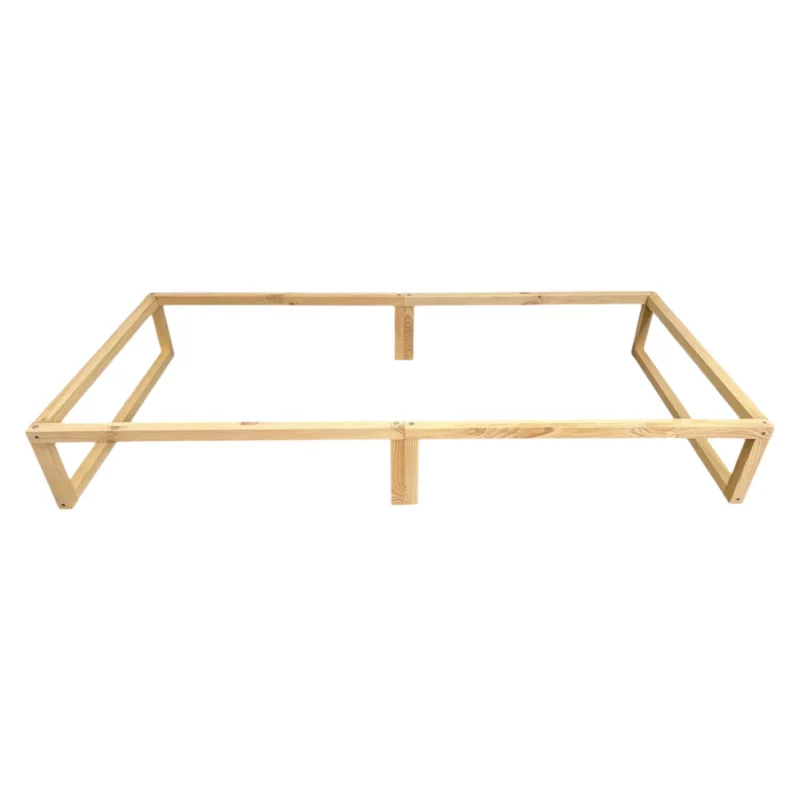
IKEA KURA Bed Riser NestUp Platform Natural Wood

IKEA KURA bed riser NestUp Platform in natural wood